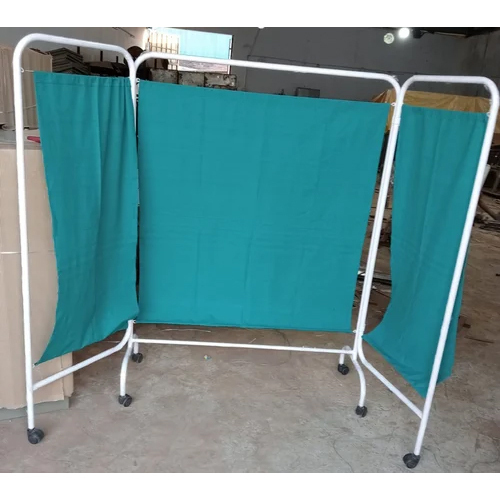
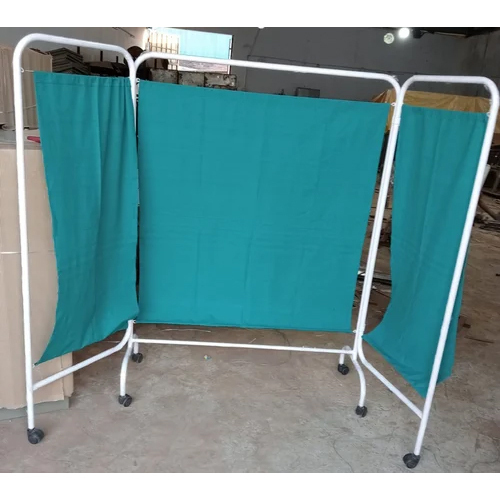
A bedside screen is a portable, folding partition used in healthcare settings (hospitals, clinics) to provide patients with privacy during examinations, treatments, or rest, featuring a multi-panel frame (2-4 folds) on castors, often with fabric curtains, made of durable materials like steel or stainless steel for easy cleaning and mobility. These essential tools allow staff to create temporary dividers in shared rooms, ensuring patient dignity, comfort, and separation.
Key Features
Folding Design: Accordion-style panels (2, 3, 4 fold) for flexible use and compact storage.
Mobility: Fitted with castor wheels (often 50mm) for effortless movement.
Durable Construction: Sturdy frames (mild steel, stainless steel) with powder coating, built for high-traffic environments.
Privacy Panels: Opaque or translucent fabric curtains (washable, removable) hung from the frame.
Hygiene: Designed for easy cleaning and maintenance.
Common Uses
Patient Privacy: Creating a visual barrier in shared wards.
Examinations & Treatments: Shielding patients during sensitive procedures.
Temporary Partitions: Dividing larger spaces as needed.
Types of Screens
Folding Panel Screens: Most common, portable, and adjustable.
Curtain Screens: Fabric screens on ceiling tracks or rolling frames.
Digital Screens: Interactive screens for entertainment/info (less common).






 Send Inquiry